Milton Road Hill
The ExecutionersMilton Road Hill is the wooded rise that stands behind the Bowden family farmhouse on the outskirts of the village of Harper, just beyond the limits of New Essex. The farmhouse itself, which Sam and Carol Bowden discovered in 1950 and fell in love with despite the cost of modernizing it, sits on ten acres of what was once a larger farm, with elms, oaks, and a line of poplars, and front windows overlooking a far vista of gentle hills. The hill behind the barn, however, is the feature that comes to define the family's experience of siege, a constant, looming presence that turns their home into a place of vulnerability rather than refuge.
The Geography of the Siege
The hill's significance is established early as the source of the Bowdens' unease. When Sam Bowden first returns home after learning of Max Cady's release, he finds himself wishing for the first time that they had close neighbors, noting that while there are many houses along the road, they are widely spaced, and none are very close. The hill itself is heavily wooded, dotted with huge gray boulders and dead falls, making it an ideal hiding place. Sam's awareness of this vulnerability is acute: on a dark night shortly after Cady's arrival in the area, he stands in his front yard and reflects that the world is a very large place and a man is almost excessively small, puny and vulnerable, while Cady lives somewhere in this night, breathing the darkness. The hill is the physical embodiment of that darkness, the place where the unseen enemy might be watching.
The Hill as Vantage Point
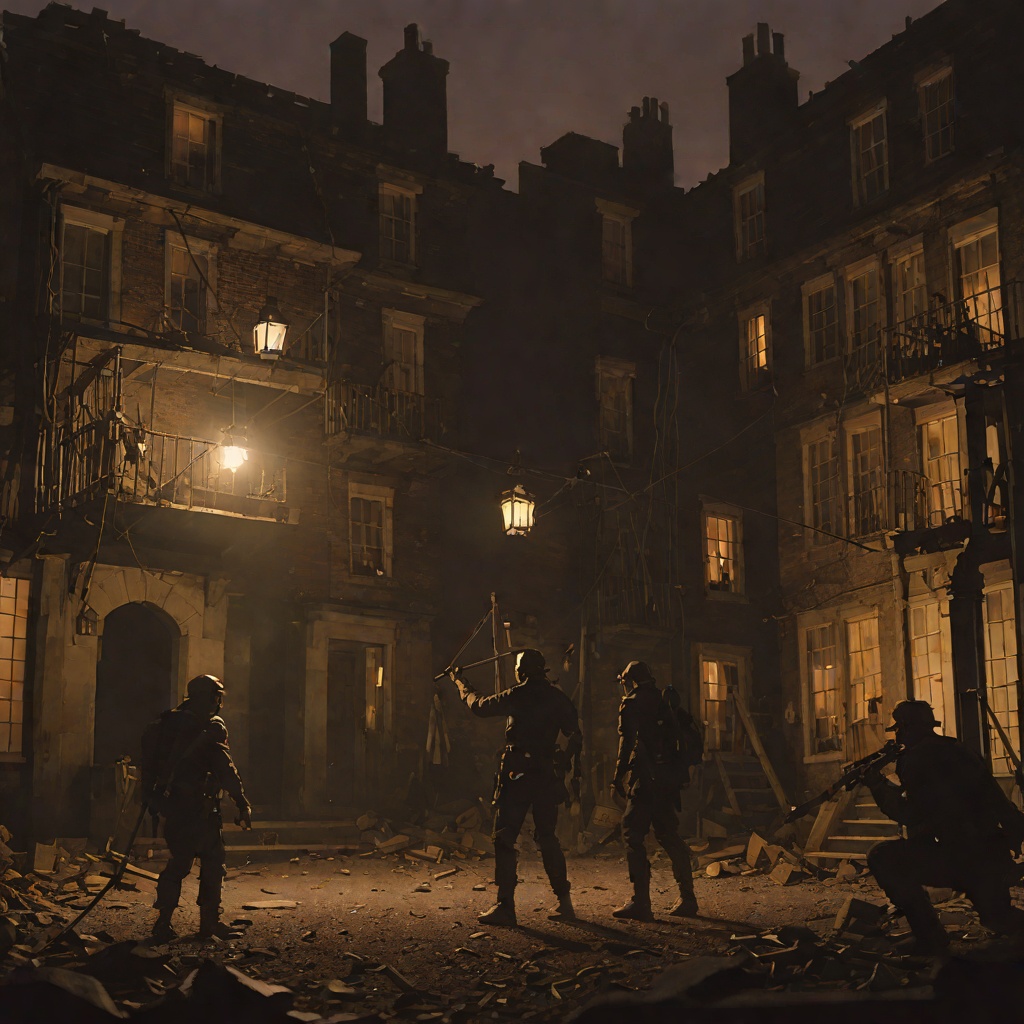
The hill becomes the focal point of the family's defensive preparations. After the family returns from a brief trip, Sam goes up to the attic window in the rear of the house and carefully searches the hillside with his binoculars, wishing it were not so heavily wooded, that there were not so many huge gray boulders, so many dead falls. The family's fear is that Cady will use the hill as a firing position, sprawled on the wet hill, cheek against the stock, finger on the trigger, tracking them with a telescopic sight. This fear shapes their daily behavior: they decide it would be unwise to use the kitchen at night, and Sam circles the house after dark with his revolver in hand, moving with caution, stopping where the night shadows are most black to wait and listen. The hill thus dictates the family's internal geography, forcing them to designate safe areas and to move through their own home with the caution of soldiers in hostile territory.
The Night of the Attack
The hill is the launching point for Cady's final, catastrophic assault. On the night of the attack, Sam is outside when he hears a scream from the house, and he attempts to return, but his right foot is injured, flopping uselessly as he runs through the utterly black night with misty rain on his face. He falls on the front steps, struggles up, and finds the door locked, with no key, and realizes in despair that he must find his way around the house to where Cady has broken in. It is from the hill that Cady has descended, and it is on the hill that the final confrontation takes place. Sam, having made his way into the house and confronted Cady, ultimately kills him. The next morning, four troopers struggle down the hill carrying an improvised litter made of two saplings cut and trimmed and threaded through the arms of two uniform tunics, bearing Cady's body. When they reach the flats they put the litter down clumsily, and Cady, lying on his back with a strangely shrunken look and the color of soiled dough, is tumbled over the side and turns slowly and ponderously to lie face down in the damp grass. A trooper remarks that Cady made it halfway to the car before he died, a final detail that underscores the hill's role as the site of both the crime and its grim conclusion.
The Hill and the Family's Transformation
The hill is not merely a physical location but a psychological force that transforms the Bowden family. Carol Bowden, who had already been struggling with the strain of the siege, describes her anxiety in terms of being trapped on a carnival merry-go-round, unable to stop it from going around and around, wanting to stop being scared. The hill is the source of that fear, the ever-present reminder of the threat that has invaded their lives. Sam's own transformation is equally profound: he finds himself contemplating actions so alien to his nature as to revolt him, a reversal of all his values, and he knows that this inner combat makes visible changes in his manner, leaving him moody and absentminded. The hill, which once offered a vista of gentle hills and the promise of summer, becomes the symbol of everything the family has lost—their sense of safety, their peace of mind, and their innocence. In the aftermath, Carol reflects that everything they have is balanced on such a delicate web of incidence and coincidence, a realization born of the terror that the hill represented. The hill, in the end, is the place where the Bowdens' American dream of suburban tranquility is shattered, and where they must confront the fragility of the world they have built.